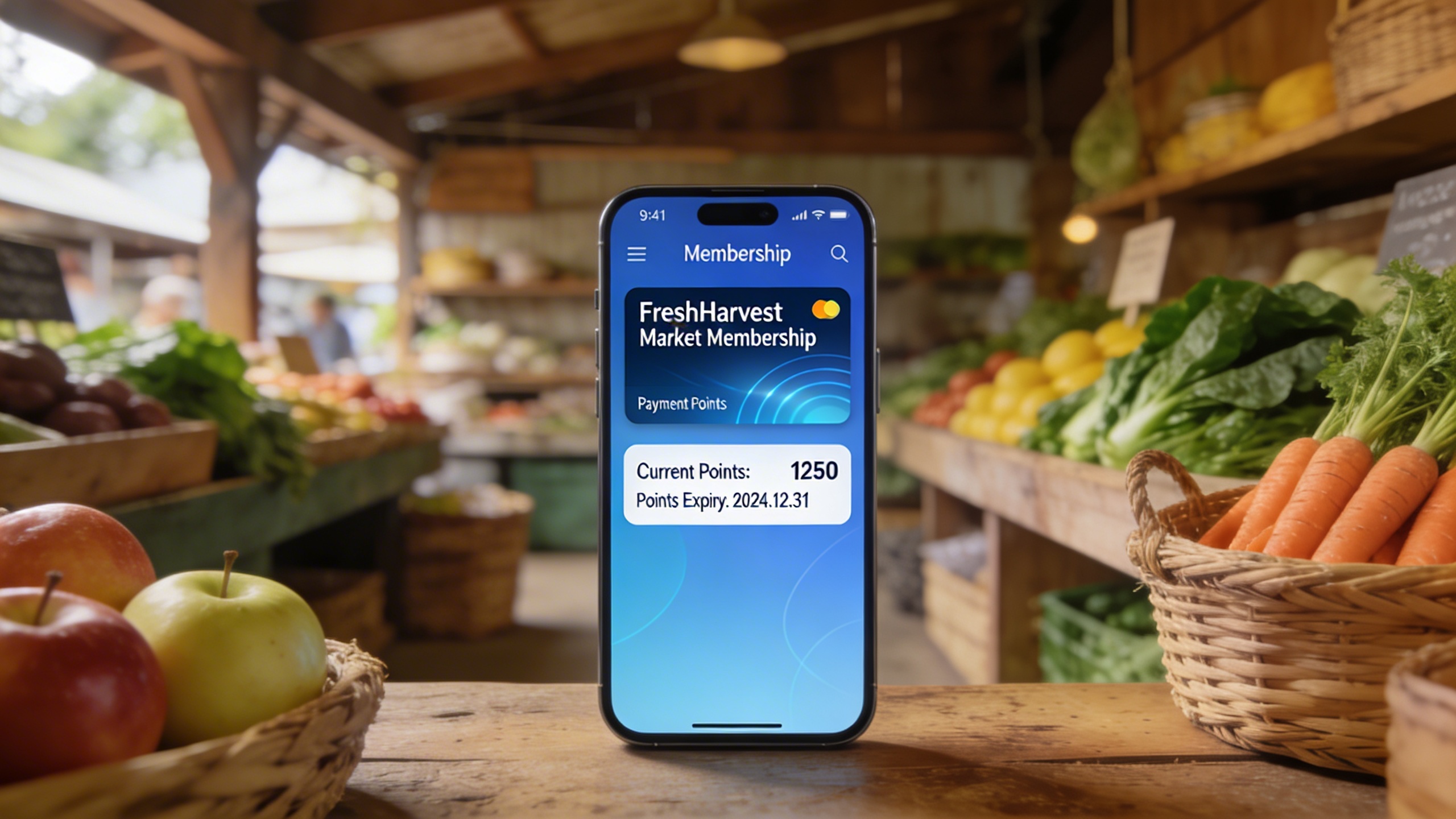
JA Group Aichi is advancing mobile point payments and the digital transition of membership cards. At first glance, it looks like an effort to “catch up on delayed digitalization,” similar to initiatives seen in local retail stores and shopping districts. However, what managers and CTOs should decipher from this news is not merely a story of technology adoption. The decision-making process of why and under what objective function (the goal to be optimized) a community-rooted “cooperative” — a special organizational form — defined its IT, holds a mirror to the root cause of why many companies fail in their IT strategy.
- The Dual Objective Function of “Community-Embedded DX”
- What the “Digital Membership Card” Aims to Integrate
- The “Community-Embedded DX” Process General Companies Should Learn
- The Often-Overlooked IT Design for “Sustainability”
- Conclusion: What Management Should Define is Not “Technology” but “Consensus”
The Dual Objective Function of “Community-Embedded DX”
When considering IT investment for cooperatives like JA, the first point we must understand is that their objective function is fundamentally different from that of a purely private company. The IT objective function for a general company often converges on economic values like “improving profitability,” “accelerating growth speed,” or “cost reduction.” However, cooperatives have social objective functions that exist in parallel — “improving services for members (who are both customers and owners)” and “maintaining/developing the local community” — which cannot be measured by economic rationality alone.
In the case of JA Aichi, the feature of “mobile point payments” is not just about improving payment convenience. It likely has, as part of its purpose, providing “social safety” by reducing in-store dwell time for users, including elderly members, and lowering infection risks. Furthermore, by digitizing purchase data, we can glimpse data collection that serves the cooperative’s original mission of “supply-demand adjustment,” feeding back into regional agricultural production planning.
The mistake many general companies make here is proceeding with IT projects while leaving such composite objectives vague as an “ambiguous vision.” As a result, the IT department chases only superficial KPIs like “improving convenience” and loses sight of the original managerial and social value. The JA case likely defined IT functions with a clear awareness of different value axes from the outset. This offers important implications for management in defining IT.
What the “Digital Membership Card” Aims to Integrate
The digitalization of membership cards is also not merely a replacement for paper. A physical membership card condenses functions like “identity verification,” “point accrual,” and “privilege service provision” into a single card. When migrating this to a smartphone app, management must decide on the design of the “information architecture”: which functions to prioritize and how to link which data.
Specifically, the following three data linkages can be anticipated.
- Linking Purchase Data and Personal Data: Combining “operational IT” data (who bought what, when) with “managerial IT” data (member attributes).
- Linkage with Financial Services: Potential linkage with JA Bank account information or credit information. This also touches the realm of “administrative IT.”
- Linkage with Local Producer Data: Tracking information on producers of purchased agricultural products. This directly connects to creating social value.
A common failure seen in general companies is each department (sales, marketing, finance, CSR) introducing separate IT systems, causing this data to become siloed. In an organization like JA, the strong common purpose of member services makes the need for data integration more likely to be recognized from the start. Conversely, the weaker the common objective function in a general company, the more actively top management must define the “purpose of data integration.”
The “Why of Integration” Management Should Ask
If you were to digitalize membership cards at your company, could you answer the following questions beyond just “because it’s convenient”?
- What kind of decision-making (e.g., changing product assortment, proposals to target segments) do you want to accelerate with the integrated data?
- Does that decision-making place more weight on profit improvement (operational IT) or on increasing customer loyalty (managerial IT)?
- How do you evaluate the cost of data integration against the qualitative improvement in decision-making it generates?
The JA case shows a structure where investment decisions for complex data integration are easier to make precisely because there is a clear “Why” in the form of a social mission.
The “Community-Embedded DX” Process General Companies Should Learn
So, what can general companies not deeply embedded in a specific region or community learn from this case? It is the “process of defining IT objectives by involving stakeholders.”
JA’s digitalization likely involved consensus-building through diverse stakeholders like member representative meetings or board meetings. If the sole pursuit was convenience, partnering with more advanced private payment services would be faster. However, they may have chosen their own path from the perspective of member data sovereignty and contributing back to the local economy.
Translating this process to a general company presents the challenge of “how to incorporate not only management but also frontline managers, and sometimes customer voices, into the IT investment decision process.” In many companies, IT investment decisions end with closed discussions among management or the IT department, failing to reflect the true voices of the actual users — the frontline and customers. As a result, even if expensive systems are introduced, utilization rates remain low.
A Practical First Step: An Objective Function Workshop
For example, when considering a CRM (Customer Relationship Management) system overhaul at your company, why not hold a workshop like the following?
- Select Stakeholders: Gather the sales manager, marketing representative, customer support lead, and executives (CEO/COO).
- Share the Ideal State: Discuss “If this CRM functioned perfectly, what kind of decision-making would become possible in each department?”
- Vote on Objective Functions: Prioritize the emerging ideals (e.g., “predicting customer lifetime value,” “improving deal success rate,” “shortening inquiry response time”) and decide on a maximum of three “optimization goals.”
- Translate into IT Requirements: Convert the chosen objective functions into concrete IT requirements (e.g., “ability to link past purchase data with inquiry history,” “automatic report generation”).
This process itself is the practice of management defining IT. The JA case indirectly teaches the importance of this consensus-building by involving a broad range of stakeholders — the “members.”
The Often-Overlooked IT Design for “Sustainability”
There is another important characteristic of IT in community-embedded organizations. It is the excessive consideration for “sustainability.” A private venture might have the option to “prioritize scale and refresh the system in three years.” However, an organization like JA operates on the premise of existing in the community for decades. Therefore, perspectives like “is long-term maintenance possible?”, “can we escape vendor lock-in?”, and “can we preserve the asset value of data into the future?” strongly influence IT system choices.
This is a perspective often underestimated by many SME managers. The common result of indiscriminately adopting SaaS based solely on cost and immediate effect is that five years later, subscription fees balloon, data is scattered across vendors and becomes irrecoverable, and personalized business processes proliferate.
When managers consider IT investment, do they have a long-term blueprint asking, “What does this choice do to our company’s IT assets in 3 or 5 years?” The JA case highlights the necessity of thinking about the nature of IT based on the premise of the organization surviving across generations. How and in which systems will your company’s core operational data (customer info, product info, financial data) be stored, and how will you guarantee its accessibility into the future? The design of this “data architecture” is precisely the responsibility area from which management must not shy away.
Conclusion: What Management Should Define is Not “Technology” but “Consensus”
The news about JA Group Aichi’s mobile payments and digital membership cards tends to be dismissed as just one regional DX case. However, the process behind it — “how an organization encompassing diverse stakeholders defined IT objectives that balance social and economic value” — holds universal lessons.
The task for managers and CTOs is not to chase the latest technology trends. First, based on the company’s raison d’être (purpose) and mid-to-long-term vision, they must verbalize and build consensus around “what is the objective function our company’s IT should optimize?” by involving relevant parties. Only on that foundation does the discussion about “technical means” — which tools to choose and how to link which data — become meaningful.
IT is not an “outsourced area” where management has shirked responsibility. What the JA case suggests is quite the opposite. Organizations where diverse and complex values intersect are precisely the ones that need management leadership to define IT’s purpose and build a sustainable digital foundation. This is an unavoidable management challenge facing every modern company.


Comments