- What the Security Industry’s DX Awareness Survey Reveals About On-Site Realities
- The Gap Between “IT the Front Line Wants” and “IT Management Thinks About”
- Learning from Municipal DX: The Barrier of “Paper Notifications”
- How Management Can Reflect On-Site Voices in IT
- “Delegation to the Front Line” as a Management Decision
- Summary: When the Front Line Moves, Management Moves Too
What the Security Industry’s DX Awareness Survey Reveals About On-Site Realities
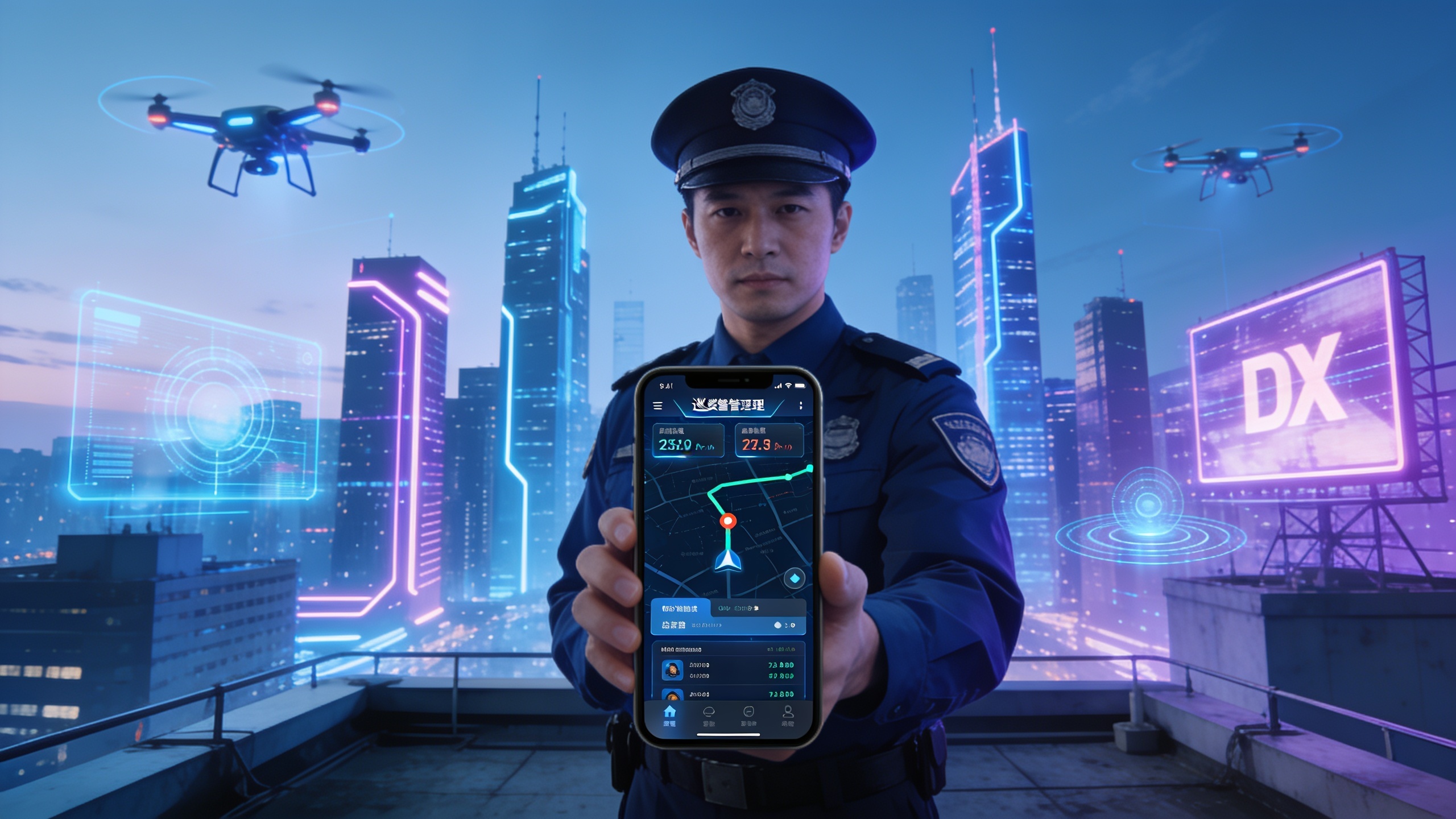
A survey showing that 81.4% of on-site security staff believe “DX is necessary” is drawing attention. In a study on digitalizing security company operations, the need for smartphone-complete work styles was particularly pronounced.
This number isn’t just a trend. It shows that on-site voices can become the starting point for changing management’s IT decisions.
Traditionally, the security industry has been a world of “paper and pen.” Patrol records, reports, attendance management—everything is analog. However, labor shortages and the wave of work style reforms are creating urgent demands for digitalization at the front-line level.
The Gap Between “IT the Front Line Wants” and “IT Management Thinks About”
In many companies, IT strategy is led by top management or the information systems department. However, there is often a gap between the IT the front line truly needs and what management thinks “should be introduced.”
Management tends to set abstract goals like “cost reduction” and “operational efficiency.” On the other hand, the front line has specific problems like “I want to fix this task right now.”
Behind the 81.4% of security guards who said DX is necessary are these real on-site needs. They want a work style where they can check patrol routes, create reports, and clock in and out—all with a single smartphone.
On-Site-Led IT Implementation Determines Success
Hacobu’s explanation of moving dispatch operations away from analog follows a similar pattern. In the logistics industry, dispatch operations have long relied on “the intuition and experience of veterans.” However, Hacobu’s service emphasizes a UI that on-site drivers and dispatchers can use intuitively.
Even if management decides to “introduce a dispatch system,” it’s meaningless if the front line can’t use it. Conversely, if the front line feels “this is something I can use,” the post-introduction retention rate increases dramatically.
Tottori Prefecture’s “DX Human Resource Development Support Starting from Visualization” also emphasizes this perspective. Through visualizing operations, it designs a process where the front line itself recognizes the need for IT.
Learning from Municipal DX: The Barrier of “Paper Notifications”
The case of Miyakonojo City in Miyazaki Prefecture symbolizes the reality of municipal DX. With support from GMO GlobalSign HD, they began digitalizing the remaining “paper notifications.”
In many municipalities, notifications to residents are still primarily on paper. The benefits of digitalization are clear, but on-site resistance and legal barriers stand in the way. Miyakonojo City’s efforts can be seen as an attempt to conquer this “last stronghold.”
For business managers, this case is full of insights. It provides hints for reviewing your own company’s IT strategy: which tasks still have a “paper culture,” and what are the points of resistance when digitalizing them?
How Management Can Reflect On-Site Voices in IT
So, how can management correctly grasp the IT needs of the front line and reflect them in strategy?
Visualize the Front Line’s “Problems”
First, list the “problems” the front line feels on a daily basis. A security guard saying “copying patrol records is a hassle,” a dispatcher saying “only veterans know how to adjust routes”—these are all issues that IT can solve.
When management conducts interviews with the front line, it’s important to ask, “What specific task takes the most time?” instead of an abstract “operational improvement.” This single question can draw out the front line’s true feelings.
Choose Tools Based on the “Smartphone-Complete” Standard
As the security industry survey results show, the front line wants IT that can be completed on a smartphone. For on-site workers with limited time to sit in front of a PC, smartphone compatibility is a must.
When selecting tools, check these three points:
- Can on-site workers operate it with just a smartphone?
- Can introductory training be completed in a few hours?
- Can it integrate with existing systems?
Tools that don’t meet these conditions won’t take root on the front line.
Accumulate Small Success Experiences
Instead of aiming for company-wide DX all at once, first create a small success experience at one site. In the security industry, try introducing smartphone-based patrol records at one security base. In logistics, pilot a dispatch system at one office.
This “small success” raises the front line’s IT literacy and creates motivation for the next step. Tottori Prefecture’s “DX Human Resource Development Support Starting from Visualization” is exactly this approach.
“Delegation to the Front Line” as a Management Decision
What’s important here is a shift in thinking: entrusting IT strategy to the front line. Instead of the traditional top-down approach where “management decides and forces it on the front line,” it’s a bottom-up approach where “management approves the tools the front line chooses.”
This doesn’t mean management is running away from IT. Rather, management should focus on “creating an environment for the front line to utilize IT.” Specifically, these roles include:
- Securing the budget for tools chosen by the front line
- Reviewing internal rules that hinder the front line’s IT use
- Creating a system to roll out on-site success stories across the company
The 81.4% figure from the security industry is a golden opportunity for management to listen to the front line. I recommend not missing this chance and steering toward an on-site-led IT strategy.
Summary: When the Front Line Moves, Management Moves Too
The security industry’s DX awareness survey, Hacobu’s dispatch reform, and Miyakonojo City’s notification digitalization. What these cases have in common is that “the urgent needs of the front line” are the driving force behind IT adoption.
The era when management relied solely on theoretical plans or vendor proposals when thinking about IT strategy is over. The front line itself chooses and masters tools it feels “it can use.” Creating the environment for that is the role of management from now on.
In your company too, start by asking the front line, “What kind of IT would make your work easier?” That answer should be the first step toward your next IT strategy.


Comments