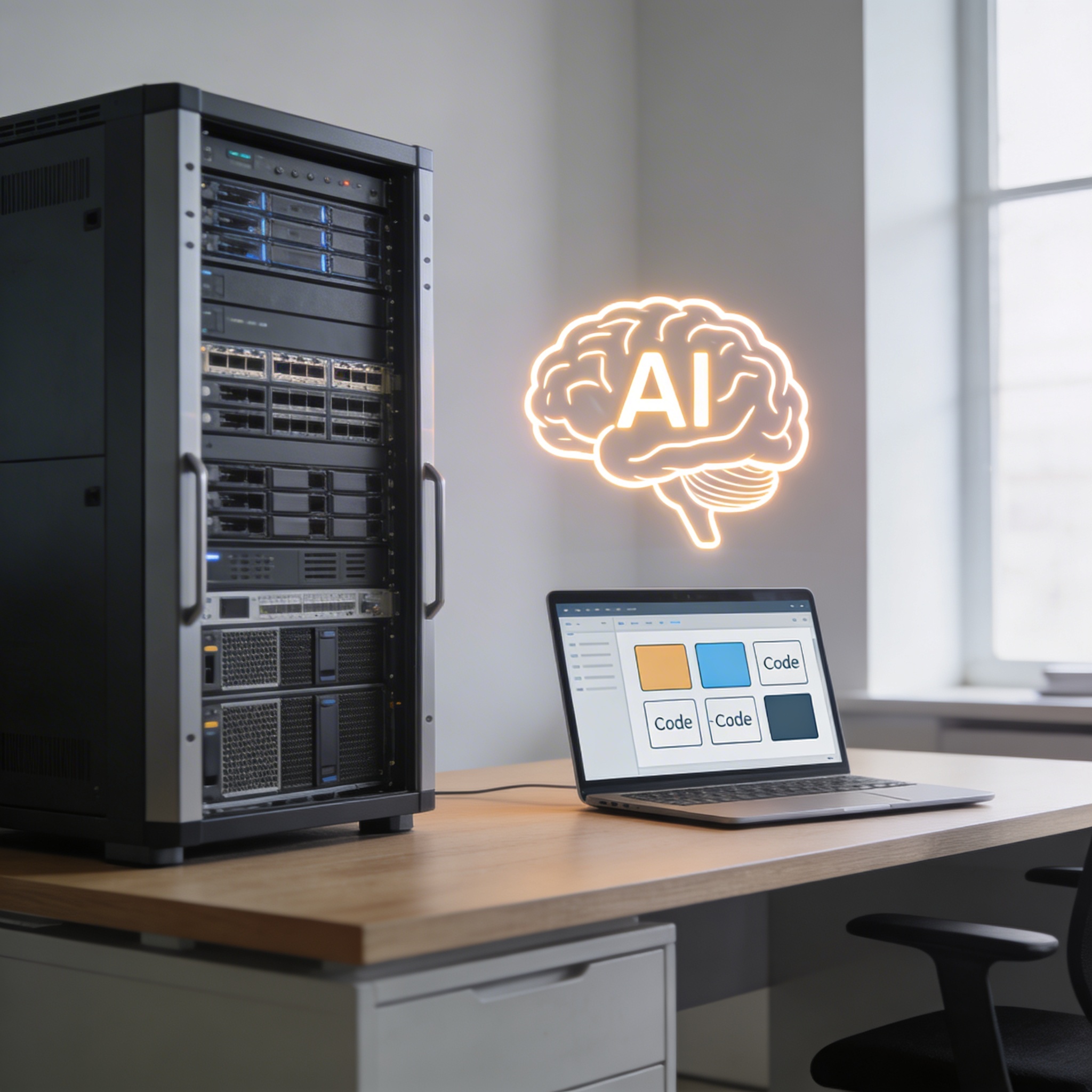
I’ve been sensing a shift in recent conversations with clients. “We canceled that SaaS.” “We postponed that new implementation.” Major tool rollouts have also decreased. This isn’t just cost-cutting. The very philosophy of IT investment is at a major turning point.
Hello. This is Hodaka Goto from IntelligentBeast LLC.
In discussions with executives, CTOs, and IT managers, a common “suspicion” has emerged: “Wouldn’t it be faster and easier to build it ourselves now rather than bringing in another SaaS?” Today, I’d like to share my perspective on the essence of this change and the IT investment strategy for this new era.
- 1. The End of Major SaaS Rollouts and the “Cancellation” Wave
- 2. The Reality Behind “Is Building It Faster?” and the AI Impact
- 3. The Core of New IT Investment: Prioritize Infrastructure and “Systematize” AI on Top
- 4. The Required Mindset Shift for Executives, CTOs, and IT Managers
- 5. Conclusion: Balance Ownership and Autonomy to Strengthen Your Company’s “Digital Constitution”
1. The End of Major SaaS Rollouts and the “Cancellation” Wave
Until a few years ago, the answer to operational efficiency was clear: implement powerful, packaged SaaS solutions like Salesforce or Workday. However, the situation has completely changed.
Contrary to the fanfare at launch, challenges pile up once operations begin. Expensive customizations are needed to fit your company’s workflows. License fees balloon every year. And above all, the unspoken sentiment of “it’s hard to use” accumulates internally.
As a result, many companies are starting to choose “cancellation.” This isn’t merely an IT cost review. It’s a fundamental re-evaluation: are the risks of “entrusting” critical business processes to an external service worth the price?
Recently, an IT manager from a mid-sized company consulted me. “We want to switch our sales management tool from SaaS to in-house development.” The reason? “Existing tools don’t fit our sales team’s unique deal flow at all.” They calculated that the accumulated customization costs would exceed the initial development expense.
2. The Reality Behind “Is Building It Faster?” and the AI Impact
Where does this feeling that “building is faster than buying SaaS” come from? Two major changes are in the background.
One is the dramatic evolution of cloud infrastructure and development tools. Platforms like AWS and GCP have matured, making server setup and database configuration far easier than before. The foundation for development is now in place.
The other is the advent of AI, particularly generative AI. This is a game-changer. I’ve started hearing this from executives: “I hear if you describe the specs to ChatGPT, it writes the code. Couldn’t we build the exact tool we envision ourselves?”
This thinking is groundbreaking. It holds the potential for executives to shift from being “IT consumers” to “creative agents.” Of course, executives won’t build all systems. However, the environment is being established where “wouldn’t it be nice if…” ideas—like small departmental tools or data aggregation automation scripts—can be quickly realized.
3. The Core of New IT Investment: Prioritize Infrastructure and “Systematize” AI on Top
So, what should future IT investment look like? My view is clear.
The investment focus should shift from the “application layer” to the “infrastructure layer.”
Concretely, this means concentrating resources on building a stable server environment, a secure network, and an organized data foundation (data lake/warehouse). To use a house analogy, this is the work of preparing the land and constructing a sturdy foundation and framework.
It is on this robust infrastructure that AI’s true value is realized. AI is not a magic wand. It only produces meaningful results when there is stable ground where quality data flows.
And crucially, it’s about integrating AI into “systems.” We must design not for one-off demos or experiments, but for continuous operation as part of daily work. For example, designing a “flow” where, once order data is entered into the database, AI automatically updates demand forecasts and reflects them on a dashboard.
Start by visualizing where and in what form your company’s data is scattered—Excel, Google Sheets, data from various SaaS platforms… Then, build a foundation (cloud storage or DB) that can safely consolidate this data in one place. This is the beginning of everything.
4. The Required Mindset Shift for Executives, CTOs, and IT Managers
This change brings different realizations for each role.
For executives, a perspective shift is needed: viewing IT not as something to “buy” but as a “foundation to cultivate.” The experience of using AI to build small tools themselves can be the best learning opportunity to understand the essence of management in the digital age.
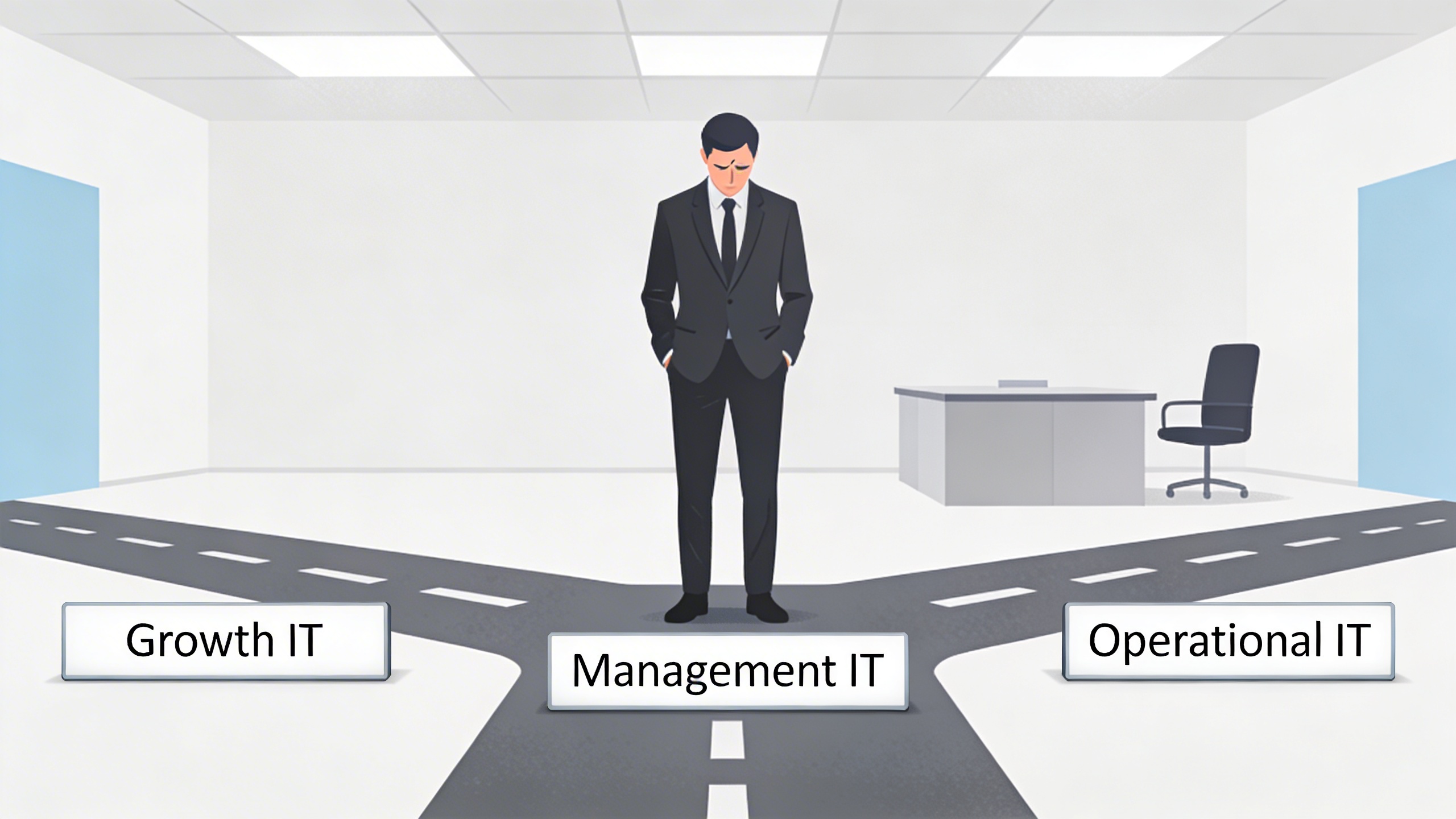
For CTOs, the axis for technology selection changes. The challenge shifts from escaping specific vendor lock-in to building an open, flexible technology stack. The team’s role should also shift from SaaS administrators to designers of value-generating systems.
For IT managers, this is a major opportunity. Traditionally, “implementation and support” were the main tasks. Going forward, they can transition to a more strategic and creative role: “identifying internal challenges and proposing the optimal mechanism (buy or build) to solve them.” Supporting in-house development using AI is a core skill for this.
5. Conclusion: Balance Ownership and Autonomy to Strengthen Your Company’s “Digital Constitution”
The trend of SaaS cancellation signals a return from IT “consumption” to “creation.” This is not an extreme argument for bringing everything in-house.
The key is balance. “Own” (cultivate in-house) what is core and differentiating; “utilize” (procure via SaaS, etc.) generic functions. The criteria for this judgment now work much more favorably for companies than before, thanks to the evolution of AI and cloud.
First, re-examine the “foundation” of your company’s IT infrastructure. Then, ask yourselves: “Can we automate any part of this business process with AI?” “Can we solve this minor inconvenience with a simple tool?”
The answer may lie not with an external vendor, but within your own company. I believe future IT investment should be an investment in fundamentally strengthening your company’s “digital constitution.”

Comments