
Mergers and Acquisitions (M&A) are a powerful tool for corporate growth. However, their success or failure is determined not on the “day” the contract is signed, but by the subsequent “integration process,” particularly the integration of IT systems. Did you acquire an “asset” or a “liability”? The answer depends on how management defines and designs IT integration.
IT Integration Failure Can Erase M&A Value
Recently, there has been a surge in offerings of specialized “IT PMI (Post Merger Integration) packages” to support post-M&A IT integration. This is not merely a story of “more convenient services becoming available.” Rather, it is evidence that the market is beginning to widely recognize the “pain” caused by IT integration failures completely undermining M&A synergy effects and rendering massive investments futile.
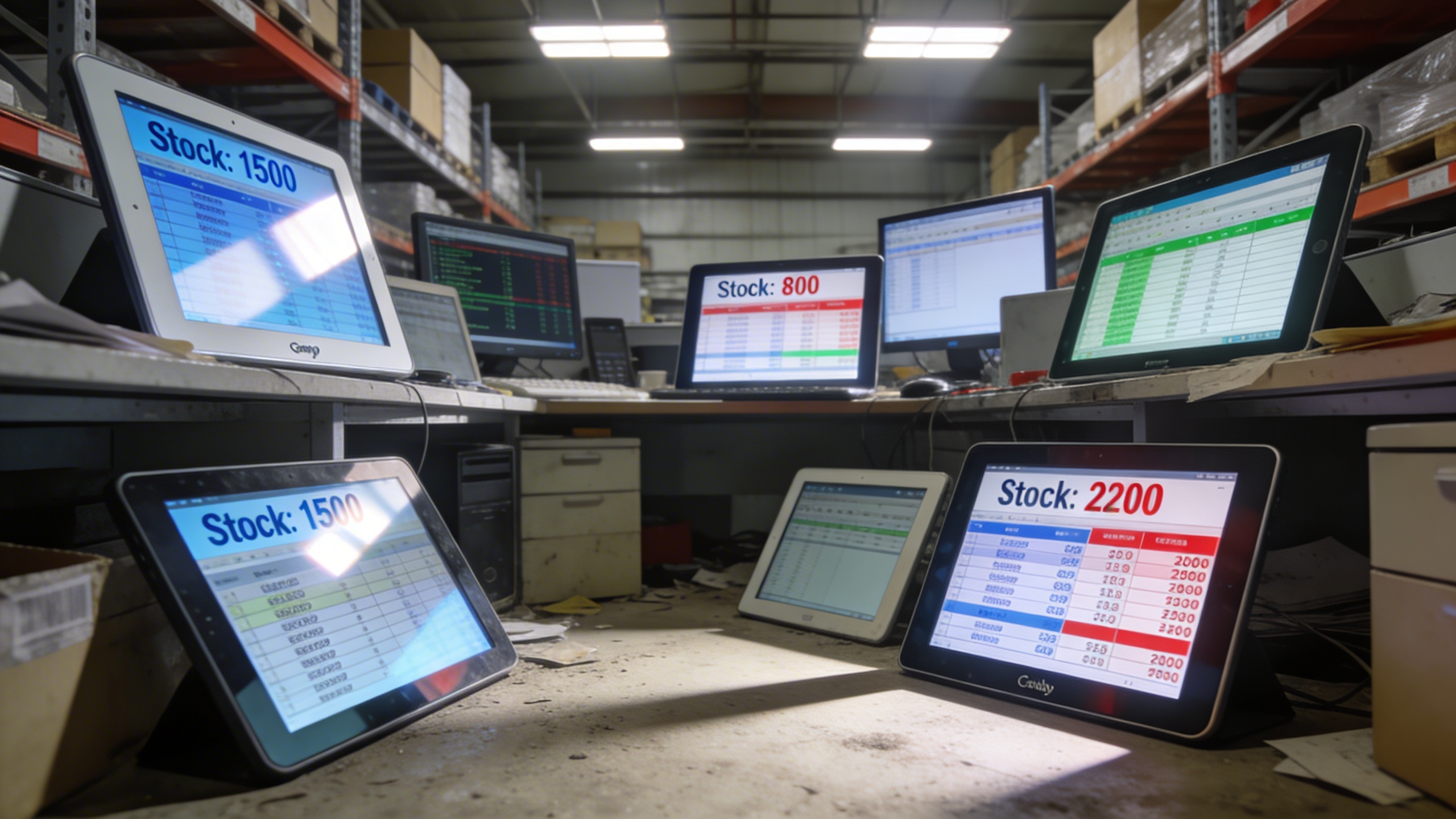
Management is meticulous about integrating finance, human resources, and brands. However, IT integration is often viewed as a “technical detail to be left to specialists” and kept distant from decision-making. What happens as a result? The acquired company’s and your own CRM (Customer Relationship Management) systems fail to connect, preventing sales teams from sharing customer information. Core system data formats differ, delaying consolidated figures critical for management decisions for months. Inconsistent security policies increase the risk of major incidents.
Such “IT integration failures” are not mere system glitches. They are fatal bottlenecks that obstruct the realization of the very business strategies sought through acquisition: “speed,” “economies of scale,” and “new customer touchpoints.”
The Essence of “IT PMI”: What Management Should Truly Acquire
So, how should management evaluate such services from a strategic perspective? The keyword is “designing repeatability.”
M&A is a “non-routine” event for most companies. Consequently, integration work tends to become a special, ad-hoc project each time, relying on individual expertise. If the person who struggled with the last acquisition is no longer there, the same mistakes are repeated. This makes it impossible to establish M&A as a pillar of a growth strategy.
The essential value of an “IT PMI package” lies in providing a blueprint that elevates this “non-routine” task into a “repeatable process.” Specifically, this includes creating a pre-integration system inventory, developing integration scenarios, standard data migration procedures, and security assessment frameworks.
What management should acquire here is not merely “external manpower.” It is the “integration know-how” that is difficult to accumulate internally as experience and a “repeatability framework” usable in future endeavors. This can be seen as an application of “IT Asset Management” principles within the specific context of M&A.
The “Three Questions” Management Must Answer to Define Integration Purpose
Whether utilizing an external package or proceeding with an in-house build, management must first clearly define the “purpose of integration.” Can you answer the following three questions?
- “Speed” or “Completeness”: What is the strategic purpose of the acquisition? If the goal is immediate market entry, “selection and concentration” may be necessary—prioritizing the integration of customer-facing front-end systems (websites, order systems) while postponing back-office integration.
- “Integrate” or “Separate”: Did you acquire the business itself, or specific technologies or teams within it? In the latter case, it may be better to deliberately keep IT systems separate to preserve independence and avoid destroying value.
- “Cost” or “Investment”: Is the IT integration budget viewed as an “expense” for cost reduction or an “investment” for synergy creation? If the latter, the plan should incorporate a medium-to-long-term perspective, such as building an analytical platform to leverage new data generated through integration.
Delegating to the IT department with a vague “just integrate everything” directive while the answers to these questions remain unclear is the greatest risk. Integration without purpose leads to wandering discussions focused solely on means, consuming vast amounts of time and money.
Learning from Case Studies: How the “Invisible Parts” of Integration Determine Success
A mid-sized manufacturer, Company A, acquired a competitor, Company B. Management saw “sales channel integration” as the primary synergy and launched a major project to merge the two companies’ ERP (Enterprise Resource Planning) systems. However, the project struggled. The main cause was failing to recognize that the two companies used completely different “parts master codes.”
Even though Companies A and B handled similar product lines, their internal part numbering systems (coding structures) had evolved independently. Simply connecting systems without integrating the “meaning of the data” meant inventory status couldn’t be tracked, and cost savings through consolidated procurement remained a pipe dream. As a result, the project took twice the initial budget and twice the scheduled time to reach a preliminary conclusion. The lost market opportunities during that period were immeasurable.
This case demonstrates that the essence of IT integration is not “system connectivity” but the “integration of business processes and data meaning.” This is an issue that cannot be resolved without deep commitment from both management and operational leaders on the ground. The checklists and frameworks provided by IT PMI services function precisely as radar to detect such “easily overlooked fatal flaws” early on.
The Pitfall of Over-Reliance on Tools: What Lies Beyond Document Digitization
In other news, there was a report of a company eliminating 620 million sheets of paper annually through document digitization. This is a remarkable achievement, but we must not stop thinking there.
In the context of M&A, if an acquired company relies on paper-based approvals and slips, is its “digitization” merely a cost-reduction project? No. Paper-based workflows vividly reflect that company’s decision-making speed, approval authority structure, and information transparency. The process of digitizing them is a prime opportunity to understand the “operational DNA” of the acquired company and design how to fuse it with your own processes.
Introducing tools (e.g., cloud-based workflow services) is merely a means. What management must define is the ideal process: “How should decisions be made in the new, integrated company, in terms of speed and transparency?” The tool must be a “repeatable mechanism” for realizing that blueprint.
IT Integration as a Management Decision: The First Step to Practice
So, what should executives and CTOs do concretely to start?
First, involve the IT integration lead from the M&A strategy phase. During due diligence, make “IT due diligence” a mandatory item alongside financial and legal reviews. The goal is not to point out system obsolescence, but to early assess integration difficulty and required investment, reflecting it in the acquisition price and post-closing plans.
Second, document the integration’s “objective function.” Define IT outcomes in terms of business results, e.g., “Enable both companies’ sales teams to operate based on a common customer list within 12 months.” This serves as a compass when the project loses its way.
Third, adopt the perspective of utilizing external services like “IT PMI” as an “acquisition” of know-how and frameworks. There’s no need to build everything from scratch internally. The crucial point is that management retains the judgment to master and customize these frameworks according to the company’s own objectives.
M&A is about unifying organizations with different cultures and systems. Chaos in IT integration is chaos in the organization itself. Conversely, smoothly integrating business processes and data flows through IT accelerates the integration of people and culture.
IT integration is not a “downstream task” that can be entirely delegated to the technical team. It is an extremely critical “management decision” that determines whether the value sought through the acquisition becomes reality or is lost. To secure the next growth opportunity, the time has come for the “blueprint for IT integration” to be placed on the management table, right alongside the financial statements.

Comments