- Common Challenges Lurking in the Latest Construction DX Trends
- What is the “Wall of Conventional Practices”?
- The Design Philosophy of “Breaking Conventional Practices” in Taisei Corporation’s Case
- Three Conditions for Changing “Conventional Practices” with IT
- What Management Should Do to Overcome the “Wall of Conventional Practices”
- Summary: IT as a Device to Visualize “Conventional Practices”
Common Challenges Lurking in the Latest Construction DX Trends
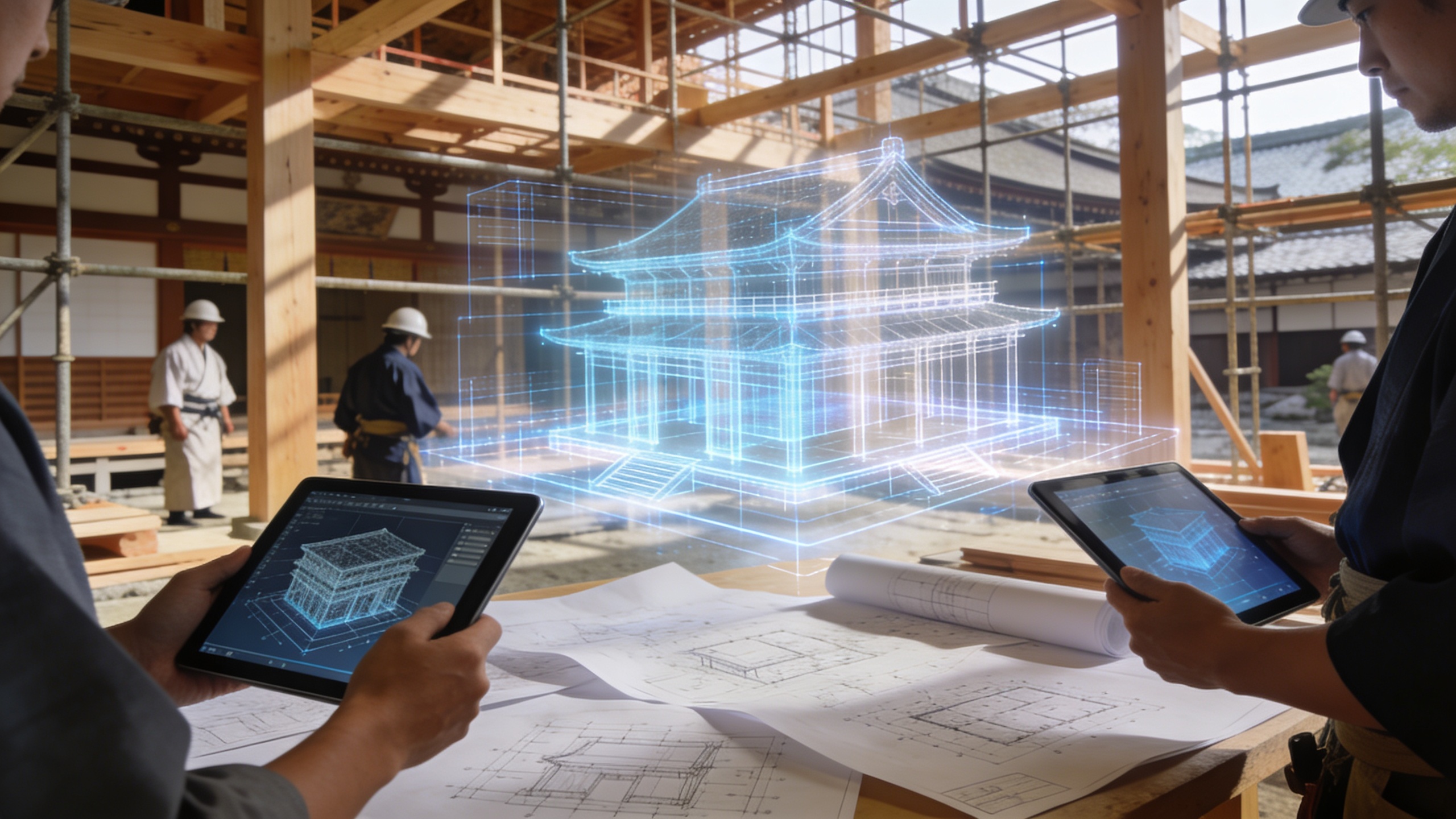
In April 2025, two intriguing news stories emerged from the construction industry. One was an interview with Haseko Corporation’s Vice Chairman Ikegami, who spoke about the “wall of conventional practices” encountered while promoting digitalization. The other was Taisei Corporation’s announcement of a company-wide rollout of “Kuraemon,” a system that fully digitizes rebar inspection.
At first glance, these two stories seem unrelated. However, they both highlight the management challenge of “conventional practices.” In this article, we analyze the “wall of conventional practices” that determines the success or failure of IT implementation from a management perspective, using examples from the construction industry’s DX efforts.
What is the “Wall of Conventional Practices”?
Haseko Corporation’s Vice Chairman Ikegami stated that “on-site conventional practices” were the biggest obstacle in the process of promoting digitalization. Specifically, he noted that long-established “norms”—such as methods for checking blueprints, conducting inspections, and communicating among stakeholders—hindered the adoption of digital tools.
This “wall of conventional practices” is not limited to the construction industry. In many companies, even after introducing new IT tools, it’s not uncommon to hear comments like “the old way is faster” or “paper is easier to check,” resulting in workflows that remain unchanged from before the introduction.
Management tends to think that “introducing tools will bring change,” but in reality, if the business processes themselves—under the guise of “conventional practices”—do not change, IT investments will be wasted.
The Design Philosophy of “Breaking Conventional Practices” in Taisei Corporation’s Case
On the other hand, Taisei Corporation’s company-wide rollout of “Kuraemon” is a system that fully digitizes the specific task of rebar inspection. Rebar inspection is the process of verifying that reinforcing bars are placed according to the design drawings. Traditionally, this involved manual checks on-site against the drawings, with paper records being kept.
What is noteworthy about this system is that it goes beyond mere paperless operations. It integrates with BIM (Building Information Modeling: a method that integrates various types of information into a 3D model of a building) and automatically compares inspection data with design data. This ensures that the accuracy of inspections, which previously relied on the experience and intuition of skilled technicians, is now guaranteed by the system.
In other words, what Taisei Corporation did was not just “introducing a tool,” but “redesigning the business process itself.” Instead of simply digitizing existing conventional practices, they changed the inspection method itself to align with the new design philosophy of BIM.
Three Conditions for Changing “Conventional Practices” with IT
Based on examples from the construction industry, we can identify the conditions for management to break through the “wall of conventional practices” when implementing IT.
Condition 1: Set the Goal as “Standardization of Quality,” Not “Efficiency”
Many IT implementations aim for “efficiency.” However, efficiency alone won’t change conventional practices. This is because there is a strong sense that “the current method works fine.”
In Taisei Corporation’s case, the goal was “standardization of quality” in rebar inspection. By making the system capable of reproducing the current state, which relies on the subjective judgment of skilled technicians, they aimed to maintain a certain level of inspection quality. This goal of “standardization of quality” became the driving force for changing conventional practices.
Condition 2: Visualize the “Cost of Conventional Practices”
What’s interesting about the Haseko Corporation case is that Vice Chairman Ikegami himself recognized the “wall of conventional practices” and implemented measures to overcome it. Specifically, he created opportunities for veteran on-site craftsmen and young engineers to use digital tools together, thereby “visualizing” the inefficiencies of the traditional methods.
Before implementing IT, management needs to visualize the “costs associated with current conventional practices.” For example, the time spent searching for paper blueprints, the effort of transcribing handwritten records, and the rate of rework due to subjective judgments. Once these costs are clear, the benefits of “changing conventional practices” can be communicated to the field.
Condition 3: Change All at Once with a “Company-Wide Rollout,” Not a Phased Introduction
Taisei Corporation implemented “Kuraemon” as a “company-wide rollout.” By switching the system across the entire company at once, rather than a partial introduction, they eliminated any room to revert to old conventional practices.
One of the reasons many companies fail in IT implementation is that during the “pilot introduction” phase, the decision is made that “the old way is fine after all.” A company-wide rollout carries risks, but a certain degree of force is necessary to fundamentally change conventional practices.
What Management Should Do to Overcome the “Wall of Conventional Practices”
The DX examples from the construction industry offer important insights for management. The success or failure of IT implementation depends not on the features or price of the tool, but on whether management can decide how to perceive and change “conventional practices.”
First, management needs to break down their company’s business processes into “conventional practices” and “essentials.” They should question “why is this task being done?” and if there are tasks that continue merely out of habit, those should be targets for change.
Next, the goal of IT implementation should shift from “efficiency” to “ensuring reproducibility.” Tasks that depend on the subjective skills of experienced workers are precisely the areas where IT systemization holds the most value.
Finally, top management themselves must demonstrate a commitment to “changing conventional practices.” Like Vice Chairman Ikegami of Haseko Corporation, a posture where top management recognizes the issues and drives change while engaging in dialogue with the field increases the probability of successful IT implementation.
Summary: IT as a Device to Visualize “Conventional Practices”
The DX examples from the construction industry show that IT is not merely a tool for operational efficiency, but a device that visualizes inefficiencies disguised as “conventional practices.”
If management proceeds with IT implementation without recognizing the “wall of conventional practices,” they risk the worst outcome: only the tools are introduced, while the work remains unchanged. Conversely, by confronting conventional practices, visualizing their costs, and clarifying the purpose of change, IT can become a powerful management tool.
In your company as well, aren’t “conventional practices” currently hindering IT implementation? Start by clarifying the true nature of those “conventional practices.”


Comments