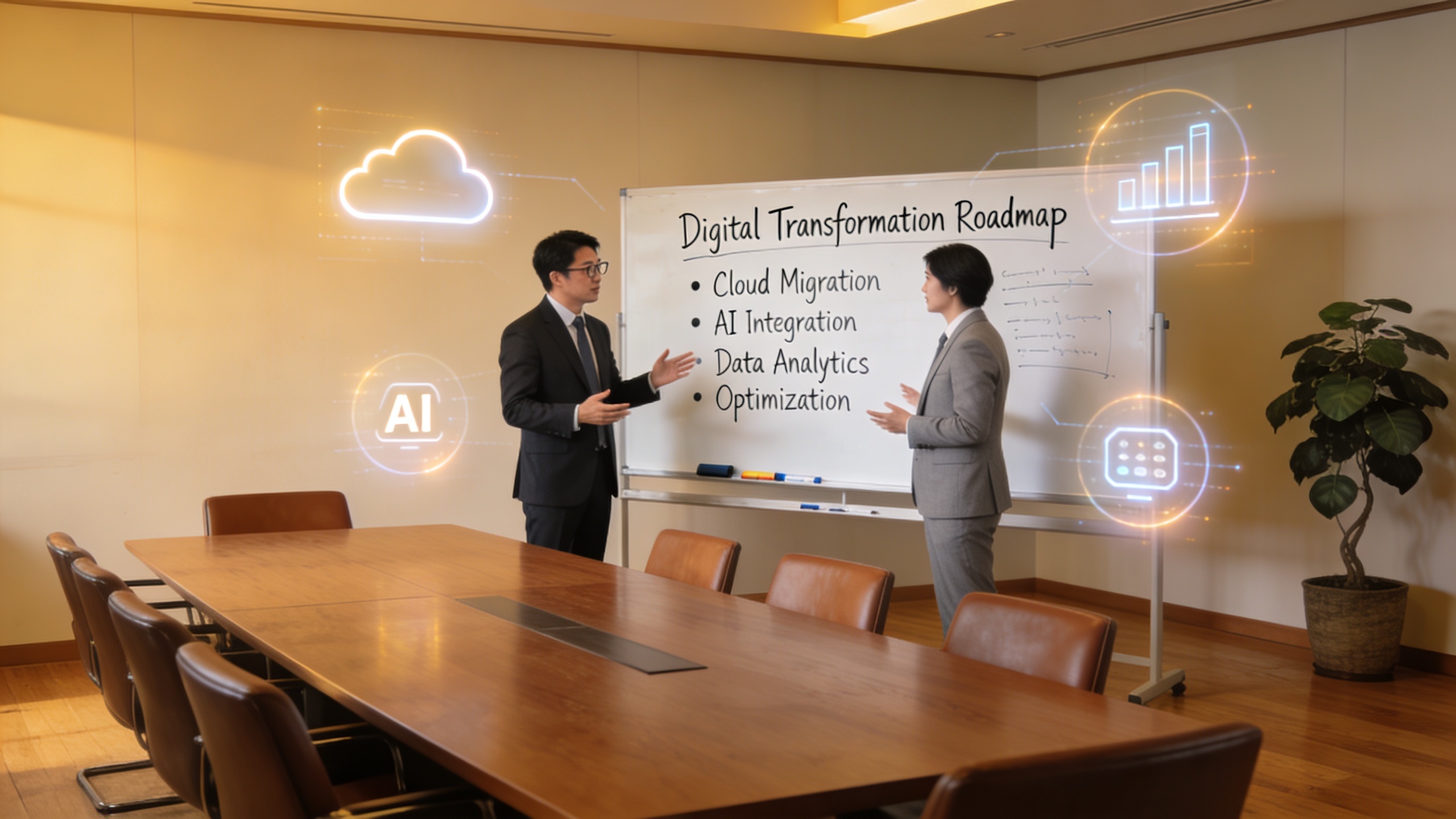
What the Term “Changing IT Departments” Signifies
Multiple companies have announced their sponsorship of the event “Changing IT Departments Spring 2026.” The name suggests a message that the role of the Information Systems (IS) department must evolve from a “system administrator who keeps things running” to a “strategic partner” driving business growth.
However, the fundamental question here is “why must the IS department change now?” It’s not a vague goal like “for DX promotion.” It’s because the business environment has shifted, technology has democratized, and above all, management has been forced to change its perception of IT from a “cost center” to a “profit center.”
This article analyzes the “changing IS department” trend not merely as a matter of upskilling or organizational restructuring, but as an opportunity to redefine the very relationship between management and IT.
Why the IS Department “Must Change” Now
Traditionally, IS departments were evaluated primarily on system stability. Preventing failures, avoiding security incidents, and reducing costs were indeed critical missions. However, with the proliferation of SaaS, frontline departments can now contract cloud services themselves. This is the rise of so-called “shadow IT.”
This phenomenon shakes the very raison d’être of the IS department. From management’s perspective, it’s natural to wonder, “If the frontline can choose and use tools themselves, why do we need an IS department?” In reality, many small and medium-sized enterprises see their IS departments become hollowed out, with someone from general affairs or accounting managing things half-heartedly.
Under these circumstances, the need for a “changing IS department” is clear. The risk is that without change, the IS organization itself may become unnecessary. But this isn’t simply about “learning new technologies” or “studying programming.” What needs to change is the scope of the IS department’s “role” and “responsibility.”
The Shift from “Defense” to “Offense” Isn’t the Core
The often-heard phrase “from defensive IT to offensive IT” requires caution. If this phrase takes on a life of its own, IS departments might be pressured to unnecessarily plan new businesses or lead the introduction of sales support tools. However, that is inherently the role of the business divisions.
What the IS department truly needs to “change” is to acquire the facilitation skills to clarify the “purpose” of IT investments for management and business divisions. In other words, as IT specialists, they need the ability to translate and explain, in management language, “how this tool will change specific operations” and “how that change contributes to achieving management goals.”
For example, when introducing Salesforce, the IS department shouldn’t just build the system. They need to present the value to management, such as “by improving sales visibility, decision-making speed in management meetings will be shortened from monthly to weekly.”
Three Perspectives Needed for a “Changing IS Department”
So, what specifically should the IS department change? I believe the following three perspectives are crucial.
Acquiring a Management Perspective
First is the management perspective. IS personnel need to understand not just their own department’s budget and resources, but the company’s overall business strategy. This includes the medium-term management plan, key investment areas, and the competitive landscape. Based on this understanding, they must be able to propose priorities for IT investments.
Specifically, it’s effective to gain access to regularly review management meeting materials or set up regular meetings with the corporate planning department. Before diving into technical discussions, cultivate the habit of always asking, “Does this investment contribute to increasing sales or reducing costs?”
Ability to Design “Integration”
Second is the ability to design integration. The more SaaS tools there are, the more data becomes siloed. Sales uses HubSpot, marketing uses Google Analytics, customer support uses Zendesk—each tool is excellent, but without data integration, management cannot see the big picture.
What is required of the IS department is the ability to connect these tools via APIs and build a unified dashboard. Skills in using no-code tools (Zapier, Make) and BI tools (Tableau, Power BI) are no longer optional but becoming essential.
For example, linking order data with customer support ticket data can visualize trends like “which product generates the most inquiries and has a low repeat purchase rate.” This is a crucial insight directly linked to product development and marketing strategy.
Cultivating a Culture of “Delegation”
Third, and most challenging, is cultivating a culture of delegation. If the IS department tries to manage all IT, bottlenecks occur, hindering the frontline’s speed. The key is to establish “guidelines” and a “support system” that allow the frontline to select and operate tools themselves.
For instance, set a rule like “Tools in this category can be contracted without IS approval, but submitting a security checklist is mandatory.” The IS department shifts from managing all tools to acting as a “platformer” that promotes autonomous IT use by the frontline.
Concrete Action Plan
Based on the discussion so far, I propose three concrete actions you can start tomorrow.
First, start a “business understanding” study session within the IS department. Invite sales and marketing members to lecture on the strengths of your company’s main products/services, points of differentiation from competitors, and customer segments.
Second, take inventory of the SaaS tools currently in use. Visualize which tools are used by whom and what effects they are producing. Cancel unused tools and consider consolidating tools with overlapping functions.
Third, set up a monthly regular meeting with management. In these meetings, make it a habit to not only report on IT investment progress but also to propose future-oriented ideas, such as “this data analysis yielded this insight” or “introducing this tool will make this process this much more efficient.”
Summary: The Essence of Change is “Redefining Relationships”
Behind the increasing number of companies sponsoring the “Changing IT Departments Spring 2026” event is likely a sense of crisis that the IS organization can no longer survive on its traditional trajectory. However, the essence of change is not merely upskilling or expanding the scope of work.
It is about management, business divisions, and the IS department itself redefining the “purpose” and “responsibility” of IT and building a new relationship. The IS department evolves from “system administrator” to “partner in business transformation.” Management shifts from “IT is something to delegate” to “IT is a management resource to be defined by ourselves.” This shift in perception is the true starting point of DX.
What will your company’s IS department change starting today?

Comments