- The DX of a Folkloric Birthplace Questions Management’s Recognition of “Assets”
- The Meaning of “End-to-End”: Integrated Design of Management IT and Operational IT
- The “Three Questions from Shiiba Village” Management Should Ask Itself
- The First Step to Practice: Starting Small with a “Digital Asset Inventory”
- Conclusion: IT is Management’s “Asset Excavation Device”
The DX of a Folkloric Birthplace Questions Management’s Recognition of “Assets”
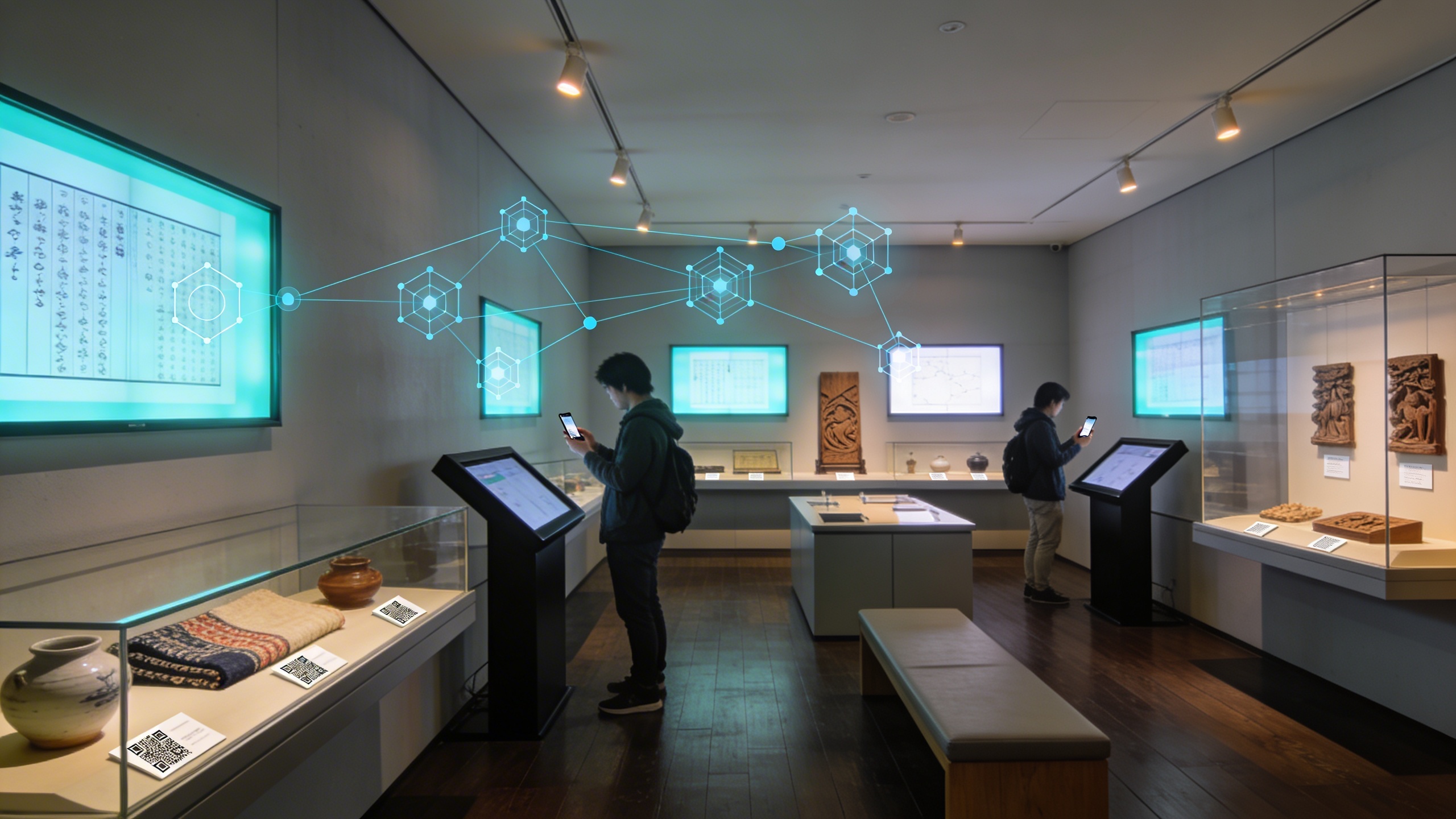
Shiiba Village, Miyazaki Prefecture. Known as the birthplace of Japanese folklore, it is one of many local municipalities rich in cultural resources yet facing geographical and human resource constraints. Here, a comprehensive digital DX project led by the private company Museum Pick is underway. Its initiatives—building a digital archive, implementing a nationwide stamp rally, and planning for future AI utilization—offer insights far beyond simply “making a museum more convenient.”
When analyzing this news from the perspective of executives and CTOs, the core lies in “redefining assets.” Many companies invest in tangible assets on financial statements and “operational IT” directly linked to sales. However, do they have a strategic plan to systematically define the value of “intangible assets” that have accumulated over years but lie dormant—similar to Shiiba’s “folk materials”—such as customer transaction histories, internal know-how, product development trial-and-error data, and employee tacit knowledge, and leverage them with IT?
When management views IT merely as a tool for “cost reduction” or “operational efficiency,” the excavation of such assets is postponed. Shiiba’s DX vividly demonstrates that the first step in management begins with re-examining the question, “What assets are lying dormant within our company?”
The Meaning of “End-to-End”: Integrated Design of Management IT and Operational IT
Museum Pick’s project is reported to implement “digital archive construction,” “nationwide stamp rally,” and “future AI utilization” in an end-to-end manner. The term “end-to-end” hides an important principle of IT strategy from which management should learn.
IT investments in many companies are fragmented by department or purpose. “Management IT” (security, core system stability) handled by the IT department, “Operational IT” (CRM, SFA) introduced by sales, and “Executive IT” (BI, dashboards) desired by leadership often have different objective functions and fall into a “siloed” state where data does not connect. This is the primary structural reason for unclear ROI.
In Shiiba’s case, the following three layers are designed in an integrated manner from the start.
1. Foundation Layer: Digital Archive (Structuring & Digitizing Assets)
This is the foundation of “Management IT.” It involves digitizing physical assets—folk materials—into high-resolution images, 3D data, and metadata (descriptive information), transforming them into searchable, manageable “structured data.” In a corporate context, this is equivalent to building a data lake that centrally manages scattered contracts, blueprints, customer service records, and operational manuals by classifying and tagging them. The goal is “asset visualization and permanent preservation.”
2. Engagement Layer: Nationwide Stamp Rally (Utilizing Assets & Delivering Value)
This is an application of “Operational IT.” It leverages digitized assets to provide new experiential value to tourists (customers). A smartphone-based stamp rally also enables the collection of visitor data (which exhibits sparked interest). In business, this can be likened to opening a company’s knowledge base as a customer portal or exposing product data via APIs to create new services. The goal is “new value creation and engagement using assets.”
3. Evolution Layer: Future AI Utilization (Generating Insights from Assets)
This is a strategic move anticipating the future sophistication of “Management IT.” It involves analyzing accumulated digital archive data with AI to generate new research hypotheses, optimize exhibits, and propose personalized tour routes. For companies, this is the stage of analyzing accumulated customer and operational data with AI for demand forecasting, automated process improvement, and new product ideation. The goal is “automated insight generation and decision support from data.”
The decisive point is that these three layers are designed “end-to-end” from the project’s inception. This contrasts sharply with many companies making fragmented investments like “first, just save PDFs to the cloud (foundation layer only)” or “let’s introduce a chatbot for now (engagement layer only),” only to later realize they cannot be integrated.
The “Three Questions from Shiiba Village” Management Should Ask Itself
To apply this museum DX case to your own company, management must pose the following three questions.
Question 1: What is our “folk material”?
For Shiiba Village, folk materials equate to “management assets beyond financial data” in a company. Specifically, these are customer inquiry and resolution histories, records of failures and successes in product development, techniques and know-how of skilled workers, and long-cultivated supplier relationship data. Are these lying dormant in scattered office files, on individual PCs, or in veteran employees’ heads, becoming personalized tacit knowledge? Management must start by listing these “intangible assets to be digitized” and prioritizing them.
Question 2: What is our “stamp rally”?
How can we provide digitized assets as “value” externally and internally, rather than leaving them as mere warehouses (databases)? For customers, possibilities include turning product development backstories into digital content or offering technical knowledge as a paid “Knowledge-as-a-Service” for the industry. Internally, this could mean interactive training materials for new hires or cross-departmental know-how sharing platforms. Without a mechanism to “use” the assets, the investment remains merely a cost.
Question 3: What is the goal of our “AI utilization”?
AI is not a magic wand. It only becomes powerful once high-quality data (the digital archive) is accumulated. Just as Shiiba Village envisions future AI use, management must consider the end goal—”how do we want to analyze this data with AI in the future?”—from the data accumulation stage. For example, if accumulating customer inquiry data, one might plan for future AI-powered automated responses or sentiment analysis. This ensures conscious structuring in an analyzable format, not just data storage.
The First Step to Practice: Starting Small with a “Digital Asset Inventory”
You don’t need to embark on such a large-scale DX immediately. We recommend that executives, CTOs, and IT managers collaborate to start with a “digital asset inventory.”
Step 1: Identify Assets
Map out, by department, where important information resides and who manages it, regardless of whether it’s paper or digital. Targets include customer lists, contracts, blueprints, manuals, training materials, and meeting minutes.
Step 2: Assess Importance and Risk
Evaluate each asset for its “importance to business continuity” and “risk of loss, degradation, or personalization.” The know-how for customer negotiations that exists only in a veteran employee’s head is a “top-priority digitization asset” with high importance and high risk.
Step 3: Launch a Small-Scale Project
Start a small project with the highest-rated assets. For example, for “sales knowledge sharing,” introduce a cloud-based wiki tool like Notion or Confluence and cultivate a culture within the department of posting success stories and lessons learned. The goal is not tool introduction but “making knowledge explicit and sharing it.”
This process itself becomes the first step for management to recognize the company’s “true assets” and define a strategy to amplify and perpetuate their value through IT.
Conclusion: IT is Management’s “Asset Excavation Device”
Shiiba Village’s museum DX contains a crucial message for all executives, beyond being just a successful regional revitalization case. It is that one of IT’s essential roles is to serve as a “device for excavating dormant management assets and visualizing, amplifying, and perpetuating their value.”
As long as management views IT merely as a cost center or a tool for operational efficiency, it will continue to overlook the company’s most valuable “intangible assets.” Digitization and DX are not the goals; they are the means. The ultimate purpose is nothing other than “redefining management assets” and “their sustainable value creation.”
Start by asking: What is our “folk material”? The process of seeking that answer is the beginning of a true, management-led IT strategy. Just as Shiiba Village envisions its future from a digital archive of folk materials, your company too should be able to chart its next growth map from its accumulated wisdom and data.
Comments