Golf Courses Are Built with IT
“Wow, that course is always in great condition.” If you’re a golfer, you’ve probably thought this at least once. But do you know what’s happening behind the scenes?
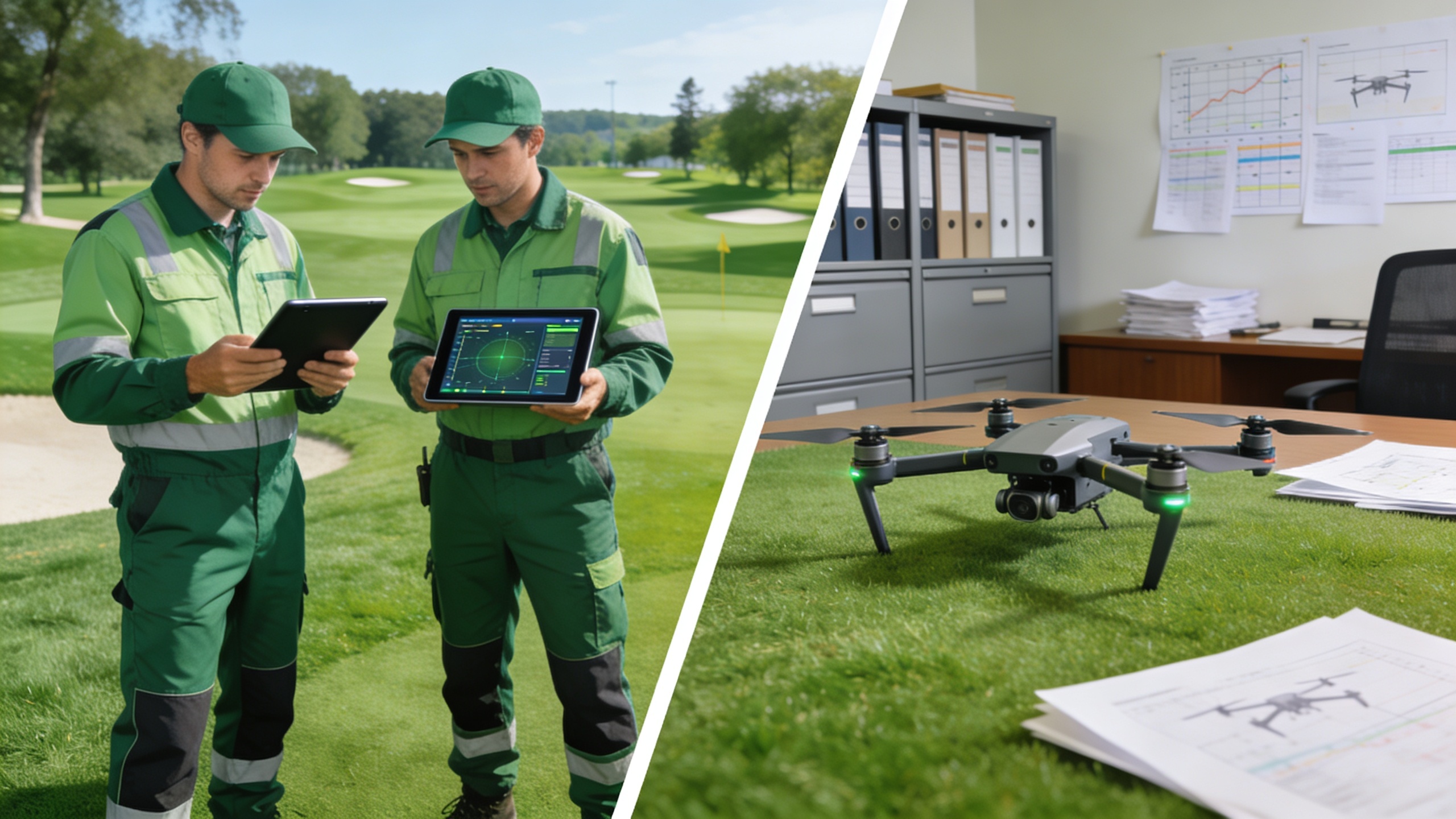
According to the latest news, digitalization is rapidly advancing in golf course management. Drones capture aerial images of grass growth, and AI suggests optimal watering and fertilizing schedules. Sensors measure the firmness of greens and automatically generate maintenance plans. These efforts are transforming course management—once reliant on the intuition and experience of skilled workers—into a data-driven business asset.
At the same time, news broke that GMO ReTECH’s “GMO Rental DX” has been certified as a subsidy-eligible tool for the sixth consecutive year. This service, which offers up to 3.5 million yen (approx. $23,000 USD) in subsidies, supports the digitalization of property management companies.
At first glance, these two stories seem unrelated. But from a management and IT perspective, they reveal a common “blind spot in IT investment.”
Why IT Introduced with Subsidies Often Goes Unused
Subsidy-eligible tools like “GMO Rental DX” certainly lower the barrier to adoption. However, what managers should really consider is “what happens after implementation.”
Take the golf course example: even if you introduce drones and sensors, without a “business design” that leverages the collected data for course strategy, they’re just expensive gadgets. Similarly, even if a property management company installs a tenant management system with subsidies, if there’s no mechanism to link that data to vacancy reduction or rent setting, the investment won’t pay off.
This is the “blind spot of IT investment” that many companies fall into. Subsidies lower the cost of introduction, but they don’t cover the design costs for transforming operations or the training costs for sustaining the system.
What Lies Beyond “Visualization”
The key to digitalization in golf courses isn’t just “visualizing” grass conditions. It’s about using that data to create maintenance schedules that consider player flow, ultimately improving course quality and increasing repeat visitors. This entire chain of value creation is the true purpose of IT investment.
What managers should focus on isn’t a list of tool features, but the “causal relationship” of how the tool will change their business processes and, ultimately, what management results it will bring. When tools are chosen based on subsidies alone, this causal design often gets neglected.
Redefining Business “Value” with IT
What the golf course case shows is that the essence of IT investment lies in “redefining the value of business operations.”
Traditionally, the value of course management depended on “the skill of the craftsman.” But digitalization is shifting that value toward “data-driven, repeatable management.” The same applies to property management.
In the past, the value of property management relied on veteran employees’ “tenant handling know-how” and “gut feelings about vacancy measures.” By introducing IT, this know-how can be accumulated as data, transforming it into “repeatable operations” that allow anyone to maintain a certain standard of management.
The “Objective Function of IT” That Management Must Define
The crucial point here is to set the goal of IT adoption not as “efficiency” but as “redefining value.”
For a golf course, the goal isn’t “efficient mowing” but “maximizing visitor satisfaction through improved course quality.” For property management, the true goal shouldn’t be “efficient rent management” but “reducing vacancy rates by improving tenant satisfaction.”
If management doesn’t define this objective function before introducing IT, tools will be adopted with different goals in each department, leading to data silos and preventing overall optimization. This is the structural reason why IT investments fail to generate ROI.
Conditions for “Sustainable IT Investment” Without Relying on Subsidies
So, how can managers make sustainable IT investments?
First, treat subsidies as a “trigger for adoption” and make a management decision to invest in the subsequent operational design. Specifically, clarify the following three points before implementation.
1. Visualize Business Processes
Before introducing a tool, visualize your current workflow. Who makes decisions, when, and based on what? What data is needed for those decisions? Without this process, introducing a tool will only create “digitalized inefficiency.”
2. Set Performance Indicators
Decide what to measure after implementation. For a golf course, it could be “course ratings in visitor surveys.” For property management, it could be “reduced vacancy rates” or “tenant satisfaction scores”—indicators that emerge as a result of operational improvements.
3. Design the Operational Structure
Who will operate the tool? Who will analyze the data? Who will use the results for management decisions? Without designing this division of roles, your tool will join the ranks of “unused tools” within a year.
Management Decisions That Fill the “Blind Spots of IT Investment”
The two stories—about golf courses and property management companies—seem to be from different industries, but from the perspective of the relationship between management and IT, they point to the same challenge.
That challenge is: the success or failure of IT investment hinges on “pre-implementation business design” and “post-implementation operational design.” It is precisely these two areas where managers should invest their time and resources.
Subsidies are merely a “means of introduction.” True IT investment is a “management decision” to redefine business operations themselves and enhance organizational competitiveness. Just as golf courses use data to create “great courses,” your company needs to reframe how to use IT as a management challenge to build a “great business.”
Before introducing IT, first define the “value” your business creates. That is the first step toward sustainable IT investment that doesn’t depend on subsidies.
Comments