
The “Digitalization and AI Introduction Subsidy” for restaurants and the push for digitalization on construction sites. At first glance, these are two news items from different industries and scales, yet they conceal the same structural trap that Japanese SME management often falls into. That is the problem of “the purpose of digitalization ending up being merely ‘operational efficiency’ or ‘obtaining subsidies.'”
As a manager, when you learn of these subsidies, what is your first thought? “Can we apply?” “Which tool should we introduce?” — These are indeed important. However, before that, there is a fundamental question that management must decide: “Why is our company pursuing digitalization?” Management failing to define this question themselves and delegating only tool selection and implementation to “experts” or “the field” is the primary reason past IT investments failed to generate ROI. It is the dangerous pattern poised to repeat in this subsidy boom.
- The Reality of “Aimless Digitalization” Illuminated by Subsidies
- The Disconnect Between “Operational IT” and “Management IT” Creates Hollowed-Out Investment
- The “Three Questions” for Subsidy Utilization That Management Must Define
- Practical Example: How to Turn Subsidies into a “Starting Point for Integration”
- Bridging the “Digitalization Disconnect” Requires Management Will
The Reality of “Aimless Digitalization” Illuminated by Subsidies
The article on restaurant subsidies cites examples like efficiency improvements in order management and attendance tracking using AI. On construction sites, drone surveying and tablet-based blueprint management are advancing. In both cases, the premise is the idea of “replacing individual business processes with digital tools.”
Here lies the pitfall. When management defines the “purpose of digitalization” only at the abstract level of “operational efficiency,” investment inevitably converges on “point” optimization. Making kitchen ordering easier, speeding up site reports—these have individual value. However, without a blueprint for how these “points” connect to the “plane” of the company’s overall growth and sustainability, the investment creates a sporadic, non-integrable IT environment.
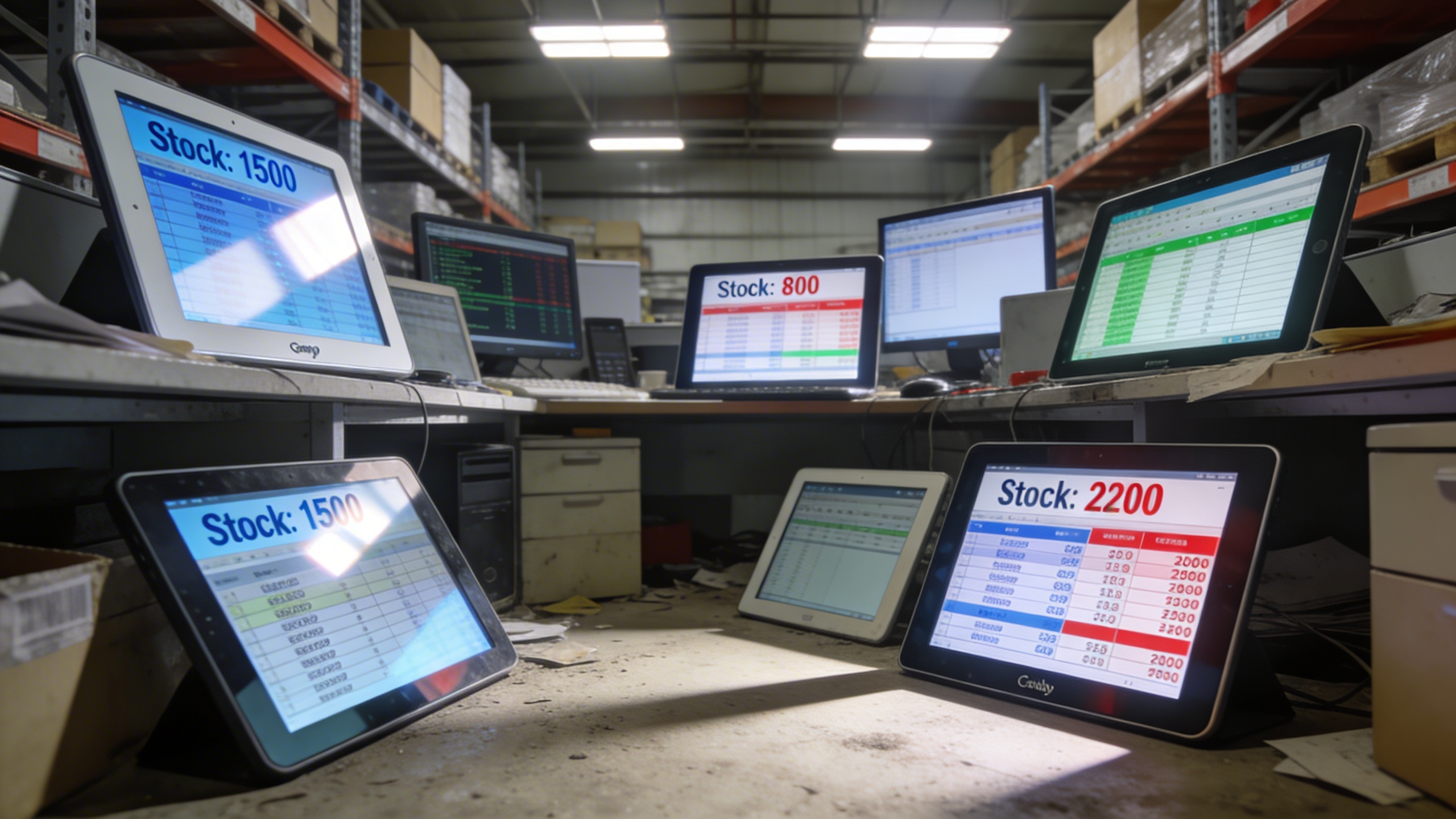
At one restaurant chain I supported, different POS systems, inventory management systems, and shift scheduling apps proliferated across stores. This was the result of each being introduced for the individual purpose of “making that task more efficient.” Management said they “left it to each store manager’s discretion,” but this is an abdication of management judgment. Consequently, it became extremely difficult to consolidate sales data from all stores for analysis or to optimize labor costs company-wide. Under the vague banner of “operational efficiency,” management had relinquished its most crucial responsibility: “designing data integration and reproducibility.”
The Disconnect Between “Operational IT” and “Management IT” Creates Hollowed-Out Investment
To understand this issue, we need to classify IT from three perspectives.
- Operational IT: IT directly linked to sales and customer touchpoints (e.g., restaurant reservation systems, construction site progress management apps). Speed and immediate impact are prioritized.
- Management IT: IT supporting decision-making and company-wide reproducibility (e.g., BI tools consolidating data from all stores/sites, platforms for standardized workflows). Integration and sustainability are prioritized.
- Administrative IT: Foundational systems, security, etc., that stably support the business.
Most of the digitalization currently promoted by subsidies is skewed toward the “Operational IT” domain. Investing in tools to speed up field operations certainly reduces field workload. However, unless management takes the next step—”How do we connect the time and data generated by this efficiency to business growth or quality improvement?”—the investment’s effectiveness ends at the field level.
What good is it if digitalization advances on construction sites, but the progress data, material consumption data, and labor cost data collected at each site remain in disparate formats and cannot be utilized for headquarters’ management decisions? Even if AI ordering works well for a restaurant, without a mechanism to leverage that ordering data to strengthen supplier negotiation power or aid menu development, it won’t progress beyond the localized effect of cost reduction.
Subsidies promote investment in “Operational IT,” but designing how data generated by “Operational IT” is transformed into value via “Management IT”—this is work only management can do.
The “Three Questions” for Subsidy Utilization That Management Must Define
So, as a manager, what should you consider when faced with digitalization subsidies? Start not with a mere tool checklist, but by placing the following three questions on the management meeting table.
1. Which “Business Reproducibility” Does This Efficiency Improvement Contribute To?
“Making ordering easier” is a means. Define the purpose beyond that. For example, the purpose is designing reproducibility, such as “improving inventory turnover by XX% across all stores, reducing working capital by △△ million yen,” or “digitizing the ingredient procurement know-how of veteran managers to enable new managers to achieve a standard cost ratio.” The tool introduced with the subsidy is merely one component to achieve this reproducibility.
2. Who Will Use the Generated Data, and for Which Decisions?
Tools inevitably generate data. Decide in advance where that data goes and who uses it. Will data from field tablets be used only for the field supervisor’s daily management, or will it become material for area managers to compare and analyze in weekly management meetings? Unless you design the data flow and usage scenarios, data remains mere “records” and cannot become “material for judgment.”
3. How Do We Measure the Success/Failure of This Investment?
Set metrics that management should track, not the subjective feeling that “work became easier.” Quantify as much as possible: man-hour reduction (hours/month), decrease in data entry error rate (%), shortening of decision-making lead time (days), etc. Subsidies reduce initial investment, but running costs and training costs are borne by the company. Without quantitative metrics, continuous investment decisions are impossible.
Practical Example: How to Turn Subsidies into a “Starting Point for Integration”
As a concrete example, consider a small-to-medium-sized restaurant chain utilizing an AI ordering subsidy. What management should do is not simply issue the instruction, “Introduce AI ordering tools to each store.”
Management Decision Scenario:
“We will utilize this subsidy to introduce the AI ordering tool ‘○○.’ The purpose is not to reduce each store’s ordering work time by 20 hours per month (that is a result). The true purpose is to accumulate all stores’ ordering data in a unified format on the cloud, enabling headquarters-led consolidated ingredient purchasing negotiations and the construction of seasonal demand forecasting models within about six months. Therefore, the subsidy application will cover only the tool. Costs for API development for data linkage and training for headquarters personnel to analyze the data will be separately budgeted as self-funded expenses. Success metrics will be 100% tool adoption rate and a △% unit price reduction from the first supplier negotiation using the accumulated data.”
In this way, position the “point” investment covered by the subsidy within the “plane” strategy designed by management itself. Tool introduction is merely the starting line.
Bridging the “Digitalization Disconnect” Requires Management Will
In restaurants, construction, and all industries, the waves of digitalization and the subsidies promoting them will likely increase. However, even as tools and data multiply, if management lacks the will and blueprint to define their meaning and integrate them, the company will only see the “digitalization disconnect” widen. This leads to the ironic outcome where the field becomes more convenient, but the company does not grow stronger.
The opportunity presented by subsidies should be seen not merely as a chance for cost reduction, but as a catalyst for management to confront the fundamental challenge it has long kept vague: “designing business reproducibility through IT.” Why are we digitalizing? The answer is not written in vendor catalogs or subsidy application guidelines. It is the unique answer for your company, one that can only be created in your management meeting room.
When digitalization is reframed not as a “technology introduction” but as a process of “management redesign,” subsidies will finally transcend being mere money and evolve into strategic investments for the future.

Comments